Tag - erp solutions

Reducing Inventory Costs with Manufacturing ERp

Reducing Inventory Costs with Manufacturing ERP

Managing inventory efficiently is one of the biggest challenges faced by manufacturing businesses. Excess inventory ties up valuable capital, while insufficient stock can lead to production delays, missed deadlines, and dissatisfied customers. In today’s competitive manufacturing environment, companies need a smarter approach to inventory management. This is where Manufacturing ERP solutions play a crucial role.

A modern ERP system helps manufacturers gain complete visibility into inventory levels, streamline procurement, optimize production planning, and reduce unnecessary costs. Businesses looking for a reliable Manufacturing ERP Software company in Pune are increasingly adopting advanced ERP solutions to improve operational efficiency and profitability.

Understanding Inventory Costs in Manufacturing

Inventory costs extend beyond simply purchasing raw materials. Manufacturers incur several expenses related to inventory management, including:

  • Storage and warehousing costs
  • Insurance expenses
  • Inventory carrying costs
  • Obsolescence and spoilage losses
  • Handling and transportation costs
  • Stockout and shortage costs

When inventory is not managed properly, these expenses can significantly impact a company’s bottom line. Traditional inventory tracking methods often lead to inaccuracies, overstocking, and inefficient resource allocation.

This is why many businesses are turning to Manufacturing ERP software companies that provide integrated systems capable of managing inventory in real time.

In this blog, we will explore how Manufacturing ERP software reduces inventory costs through real-time stock visibility, demand forecasting, optimized procurement, and efficient inventory management.

How Manufacturing ERP Helps Reduce Inventory Costs

1. Real-Time Inventory Visibility

One of the major advantages of ERP systems is real-time inventory monitoring. Manufacturing companies can instantly track raw materials, work-in-progress items, and finished goods across multiple locations.

This visibility helps businesses:

  • Prevent overstocking
  • Reduce inventory shortages
  • Improve stock accuracy
  • Minimize manual errors

With accurate inventory data, decision-makers can make informed purchasing and production decisions that reduce unnecessary inventory costs.

2. Improved Demand Forecasting

Forecasting demand accurately is essential for maintaining optimal inventory levels. A Manufacturing ERP system analyzes historical sales data, market trends, seasonal demand patterns, and customer orders to generate reliable forecasts.

Benefits include:

  • Better production planning
  • Reduced excess inventory
  • Lower storage costs
  • Improved customer satisfaction

Leading ERP Software Companies in Pune offer forecasting tools that help manufacturers align inventory levels with actual market demand.

3. Automated Procurement Management

Manual procurement processes often result in duplicate orders, delayed purchases, and inventory imbalances. ERP systems automate procurement workflows by generating purchase requisitions and purchase orders based on predefined stock levels.

Automation helps manufacturers:

  • Maintain optimal stock levels
  • Reduce procurement delays
  • Eliminate unnecessary purchases
  • Improve supplier management

As a result, companies can significantly reduce carrying costs and improve cash flow.

4. Optimized Production Planning

Inventory and production planning are closely connected. Without proper planning, manufacturers may either run out of materials or accumulate excess stock.

Manufacturing ERP solutions integrate inventory management with production scheduling to ensure the right materials are available at the right time.

This enables manufacturers to:

  • Reduce idle inventory
  • Improve production efficiency
  • Minimize material wastage
  • Meet delivery deadlines consistently

Many businesses choose ERP Software services in Pune specifically to improve coordination between inventory and production departments.

5. Better Warehouse Management

Warehouse inefficiencies can increase inventory holding costs and lead to stock discrepancies. ERP systems provide advanced warehouse management capabilities that streamline inventory movement and storage.

Key features include:

  • Barcode integration
  • Batch tracking
  • Location management
  • Stock movement monitoring
  • Automated inventory audits

These capabilities help manufacturers improve warehouse utilization and reduce operational expenses.

6. Inventory Optimization Through Data Analytics

ERP systems generate detailed reports and analytics that provide valuable insights into inventory performance.

Manufacturers can analyze:

  • Fast-moving products
  • Slow-moving inventory
  • Dead stock
  • Inventory turnover ratios
  • Supplier performance

Using this information, businesses can make strategic decisions that improve inventory efficiency and reduce unnecessary costs.

7. Reduced Material Wastage

Material wastage directly impacts profitability in manufacturing operations. ERP systems help monitor raw material usage, production losses, and scrap generation throughout the manufacturing process.

Benefits include:

  • Better material tracking
  • Reduced production waste
  • Improved quality control
  • Lower manufacturing costs

Manufacturers gain greater control over resource utilization, leading to significant cost savings over time.

8. Enhanced Supplier Management

Suppliers play a critical role in inventory management. ERP systems maintain comprehensive supplier databases and track vendor performance based on delivery timelines, pricing, and quality metrics.

This allows manufacturers to:

  • Select reliable suppliers
  • Negotiate better pricing
  • Reduce procurement risks
  • Improve inventory availability

Strong supplier relationships contribute directly to reduced inventory costs and better operational efficiency.

Business Benefits of Reducing Inventory Costs

Implementing a Manufacturing ERP system provides several long-term benefits, including:

Increased Cash Flow

Lower inventory carrying costs free up working capital that can be invested in growth initiatives, technology upgrades, and business expansion.

Improved Productivity

Automation eliminates repetitive manual tasks, allowing employees to focus on higher-value activities.

Better Customer Satisfaction

Accurate inventory planning ensures timely order fulfillment and improved customer service.

Higher Profitability

Reducing excess inventory, waste, and procurement inefficiencies directly contributes to increased profit margins.

Scalability

As businesses grow, ERP systems can easily support expanding operations without requiring major process changes.

Choosing the Right Manufacturing ERP Partner

Selecting the right ERP provider is essential for achieving maximum results. Businesses should look for a Manufacturing ERP Software company in Pune that understands industry-specific challenges and offers scalable, customizable solutions.

Key factors to consider include:

  • Industry expertise
  • Customization capabilities
  • User-friendly interface
  • Integration options
  • Technical support
  • Future scalability

Partnering with experienced Manufacturing ERP software companies ensures successful implementation and long-term business value.

How PMTRACK ERP Helps

As a leading Manufacturing ERP Software solution, it helps manufacturers streamline operations, optimize inventory management, and reduce operational costs. The platform offers real-time inventory tracking, intelligent production planning, automated procurement processes, and advanced analytics to support data-driven decision-making.

Manufacturers can accurately monitor stock levels, minimize excess inventory, reduce material wastage, and improve warehouse efficiency. By integrating inventory, procurement, production, finance, and sales into a unified system, it ensures seamless information flow across all departments.

Its powerful forecasting and reporting capabilities enable businesses to predict demand more accurately and maintain optimal inventory levels. With improved visibility and control over manufacturing processes, companies can lower carrying costs, enhance cash flow, increase productivity, and drive sustainable profitability.

Conclusion

Effective inventory management is essential for maintaining profitability and ensuring smooth manufacturing operations. Challenges such as excess stock, storage expenses, material wastage, and inaccurate inventory records can significantly impact business performance. A modern Manufacturing ERP solution empowers manufacturers with real-time inventory tracking, automated purchasing, accurate demand forecasting, and streamlined production planning, helping them reduce costs and improve operational efficiency.

As competition continues to grow, investing in the right ERP technology can provide better control, improved productivity, and long-term business growth. PMTRACK ERP helps manufacturers optimize inventory management, enhance resource utilization, and make data-driven decisions. Contact our team today to discover how a tailored ERP solution can transform your manufacturing operations and support sustainable success.


Posted By Category: ERP Software
ERP Software Prevents Stockouts and Overstocking

How ERP Software Prevents Stockouts and Overstocking

Managing inventory efficiently is one of the biggest challenges for manufacturing businesses. Having too little stock can halt production and delay customer deliveries, while having too much inventory can tie up valuable capital and increase storage costs. This delicate balance is where ERP software plays a crucial role.

Many manufacturers still rely on spreadsheets or disconnected systems to track inventory, which often leads to inaccurate stock records, forecasting errors, and costly inventory issues. By implementing a robust ERP solution, businesses can gain real-time visibility into inventory levels, automate stock management processes, and make data-driven decisions.

As a leading Manufacturing ERP Software company in Pune, PMTRACK ERP helps manufacturers streamline inventory management, reduce operational costs, and maintain optimal stock levels. In this article, we’ll explore how ERP software prevents stockouts and overstocking and why it has become an essential tool for modern manufacturers.

Understanding Stockouts and Overstocking

What Are Stockouts?

A stockout occurs when a company runs out of inventory needed to fulfill customer orders or continue production. This can result in:

  • Delayed deliveries
  • Production downtime
  • Lost sales opportunities
  • Reduced customer satisfaction
  • Damage to brand reputation

For manufacturing companies, stockouts can be particularly costly because a shortage of even a single raw material can stop an entire production line.

What Is Overstocking?

Overstocking happens when a business holds more inventory than necessary. While having extra stock may seem safer, excessive inventory creates several challenges:

  • Increased warehouse costs
  • Higher insurance expenses
  • Inventory obsolescence
  • Cash flow issues
  • Reduced operational efficiency

Finding the right inventory balance is critical for long-term business success.

Why Inventory Management Challenges Occur

Many manufacturers face inventory issues due to:

  • Inaccurate inventory tracking
  • Poor demand forecasting
  • Manual data entry errors
  • Lack of real-time inventory visibility
  • Delayed communication between departments
  • Inefficient procurement planning

This is why businesses increasingly turn to Manufacturing ERP software companies in India for integrated inventory management solutions.

How ERP Software Prevents Stockouts

1. Real-Time Inventory Visibility

One of the biggest advantages of ERP software is real-time inventory tracking.

ERP systems continuously update inventory data whenever materials are received, consumed, transferred, or shipped. This provides complete visibility into:

  • Raw materials
  • Work-in-progress inventory
  • Finished goods
  • Warehouse stock levels

Managers can instantly identify low-stock items and take corrective action before shortages occur.

2. Automated Reorder Alerts

Manual inventory monitoring often leads to missed replenishment opportunities.

ERP software automatically generates alerts when stock reaches predefined reorder levels. This helps procurement teams:

  • Place orders on time
  • Avoid emergency purchases
  • Maintain uninterrupted production

Automated notifications ensure critical materials are always available when needed.

3.Demand Forecasting

Accurate forecasting is essential for inventory planning.

ERP software analyzes historical sales data, production trends, and customer demand patterns to generate reliable forecasts.

Benefits include:

  • Improved procurement planning
  • Better production scheduling
  • Reduced risk of stock shortages
  • Enhanced inventory accuracy

Manufacturers can proactively prepare for seasonal demand fluctuations and market changes.

4. Production Planning Integration

Inventory management becomes far more effective when integrated with production planning.

ERP systems connect inventory data directly with manufacturing schedules, allowing businesses to:

  • Calculate material requirements accurately
  • Plan procurement activities efficiently
  • Ensure materials are available before production starts

This synchronization significantly reduces stockout risks.

5.Supplier Management

ERP software maintains detailed supplier information, including:

  • Lead times
  • Delivery performance
  • Purchase history
  • Pricing records

This helps procurement teams make informed purchasing decisions and avoid delays caused by unreliable suppliers.

How ERP Software Prevents Overstocking

1. Accurate Inventory Forecasting

Overstocking often results from poor demand predictions.

ERP software uses data-driven forecasting methods to estimate future inventory requirements accurately.

This enables businesses to:

  • Purchase only necessary quantities
  • Avoid excess inventory accumulation
  • Improve cash flow management

2. Inventory Optimization

ERP systems help manufacturers establish optimal inventory levels for every item.

The software calculates:

  • Safety stock
  • Minimum stock levels
  • Maximum stock levels
  • Reorder points

By maintaining inventory within predefined ranges, businesses can reduce carrying costs while ensuring material availability.

3. Better Procurement Planning

Without proper planning, companies often place large orders to avoid stockouts.

ERP software provides detailed inventory insights, allowing procurement teams to order the right quantity at the right time.

This prevents:

  • Excess stock purchases
  • Unnecessary warehouse occupancy

Manufacturers with multiple warehouses frequently face inventory imbalances.

ERP software offers centralized inventory visibility across all locations.

Benefits include:

  • Inventory redistribution
  • Reduced duplicate purchases
  • Improved stock utilization
  • Lower storage costs

4. Inventory Aging Analysis

Slow-moving and obsolete inventory can significantly impact profitability.

ERP systems identify:

  • Aging inventory
  • Dead stock
  • Slow-moving items

This allows businesses to take corrective actions such as promotional sales, stock transfers, or procurement adjustments.

Benefits of ERP-Driven Inventory Management

Implementing ERP software delivers numerous advantages beyond stock control:

Reduced Inventory Costs

Businesses can minimize carrying costs, storage expenses, and inventory losses.

Improved Cash Flow

Lower inventory investments free up working capital for business growth.

Enhanced Customer Satisfaction

Maintaining optimal stock levels ensures timely order fulfillment and better customer experiences.

Increased Production Efficiency

Manufacturers avoid costly production delays caused by material shortages.

Better Decision Making

Real-time dashboards and reporting tools provide actionable insights for inventory optimization.

These benefits explain why many organizations are partnering with Manufacturing ERP software companies in India to modernize their inventory management processes.

How PMTRACK ERP Helps

As one of the trusted ERP Software companies in Pune, PMTRACK ERP provides a comprehensive manufacturing ERP solution designed specifically for inventory-intensive industries.

Real-Time Inventory Tracking

PMTRACK ERP offers complete visibility into inventory movement across warehouses, production facilities, and supply chains.

Smart Reorder Management

Automated reorder alerts help businesses maintain ideal stock levels while preventing shortages.

Production and Inventory Integration

The system seamlessly connects production planning with inventory management to ensure material availability at every stage of manufacturing.

Advanced Demand Forecasting

PMTRACK ERP uses historical business data to support accurate forecasting and inventory planning.

Multi-Location Inventory Control

Manufacturers can monitor and manage inventory across multiple warehouses through a centralized dashboard.

Inventory Analytics and Reporting

Comprehensive reports provide valuable insights into:

  • Stock consumption
  • Inventory valuation
  • Aging inventory
  • Procurement efficiency
  • Material utilization

As a leading Manufacturing ERP Software company in Pune, PMTRACK ERP empowers manufacturers to improve inventory accuracy, reduce costs, and enhance operational efficiency.

Conclusion

Inventory management is a critical factor in manufacturing success. Both stockouts and overstocking can negatively impact profitability, customer satisfaction, and operational performance. Modern ERP solutions eliminate these challenges by providing real-time inventory visibility, automated replenishment processes, accurate forecasting, and integrated production planning.

Businesses looking to improve inventory control and streamline operations should consider investing in a comprehensive ERP solution. With advanced inventory management capabilities, manufacturers can maintain optimal stock levels, reduce costs, and support sustainable business growth.

Ready to Eliminate Stockouts and Overstocking?

PMTRACK ERP helps manufacturers gain complete control over their inventory, production, and procurement processes. As a trusted Manufacturing ERP Software company in Pune, we deliver powerful ERP solutions tailored to the needs of modern manufacturing businesses.

Contact PMTRACK ERP today for a free demo and discover how our ERP software can help optimize inventory management, improve efficiency, and drive business growth.


Posted By Category: ERP Software
Top 10 ERP Selection Criteria to Consider When Choosing an ERP System

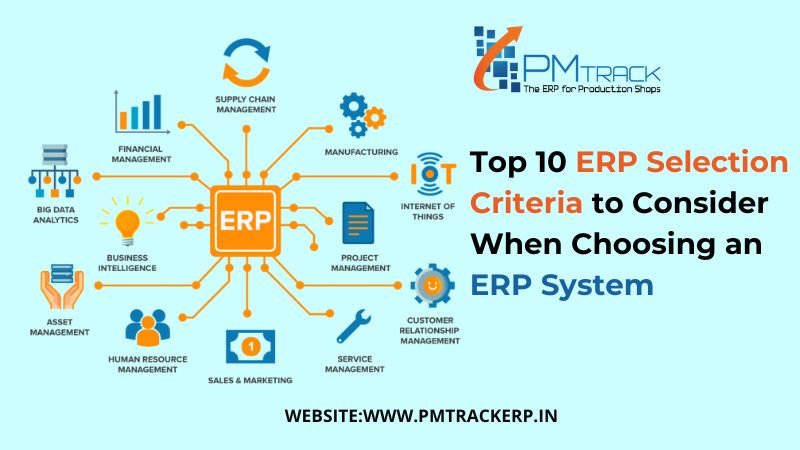
Top 10 ERP Selection Criteria to Consider When Choosing an ERP System

Top 10 ERP Selection Criteria to Consider When Choosing an ERP System

ERP is a piece of software that all of our businesses rely on to help us achieve our objectives. One of the most crucial choices we will make is choosing the best ERP system for our company. The choice must be sound.

Here are some criteria for choosing an ERP system that you should keep in mind when making your decision.

When thinking about your ERP selection criteria and how these might affect each element, always keep in mind what your business goals are.

ERP Selection Process

It takes work to choose new ERP software. It takes a lot of time and calls for both internal and external collaboration. Check out our list of the top 10 ERP selection criteria below if your company is considering implementing ERP. It will help you decide which ERP system to choose.

ERP Software

What is enterprise resource planning software, before we get into the selection process for ERP? Accounting and operations-focused business management software, or ERP, enables organizations to manage business processes through a single system. For expanding companies that want to keep and strengthen their competitive edge, ERP software has emerged as the top option.

Top 10 key ERP selection criteria:

  • The Functional Fit For Your Organization
  • Industry Experience
  • Upper Management Support
  • Integration With Existing Systems
  • Budget And Resources
  • The Technology
  • Total Cost Of Ownership And ROI
  • Evaluate And Select Options
  • Post Go Live

ERP selection criteria #1:The Functional Fit for Your Organization

Although it might seem simple, the most crucial (and time-consuming) step in the ERP selection process is determining how the functionality of software products and services fits with your company. Examining ERP software, viewing ERP demos, and meeting with solution consultants are all steps in determining the best functional fit. Internal work is also a part of it. Facilitating internal discussions to identify your business requirements for ERP and identify the functional areas to focus on is one of the most beneficial things you can do during a selection project. Important inquiries like these can help direct the conversation:

  • What about your current system is outdated? Why do you want to switch to a new ERP?
  • What complements your current business systems well?
  • What manual procedures might you be able to automate?
  • What areas of the business lack visibility or struggle to produce accurate business reporting?
  • What additional systems need to be connected to the ERP?

ERP selection criteria #2: IndustryExperience

What ERP software is used in your industry is a good question to ask when choosing an ERP. Even though they are not always industry-specific, some ERP solutions are tuned to work best in sectors like manufacturing and distribution. This crucial query can aid in reducing the number of ERP programmes you consider. Industry is a consideration for both your implementation partner and your software vendor (Oracle, Microsoft, Infor, NetSuite, etc.). It is crucial to know whether the vendor and the implementation partner have had success in your sector.

ERP selection criteria #3: user support

Users of the new ERP will come from every functional area. Make sure their wants and needs are reflected in the list of requirements to win their support. These users will benefit greatly from the success of your ERP implementation, regardless of where they are employed. Inform those users that they will receive the assistance, training, and tools they require to use the ERP and generate value for themselves as well as the entire organisation.Make sure they are aware of the support available to them as they adjust to the necessary changes. They will assist you in using and gaining from your new ERP in exchange for this. Ensure that the documentation users will require is accessible whenever and wherever they need it, and that it is of a calibre to meet their needs.

ERP selection criteria #4: upper management support

This may seem like a no-brainer standard. Too frequently, its significance is not acknowledged. Even if one chooses the ideal ERP for their business, the project will probably fail without the support of upper management. Support involves more than just obtaining funding. Your management should actively demonstrate its support. The manager can stifle progress by offering ambivalent support when a resource from another department is required. You want to feel confident that the manager genuinely supports the ERP even if there is a short-term cost at the time of the decision to support the new ERP or use the existing system.

ERP selection criteria #5: integration with existing systems

The majority of businesses that are choosing an ERP have other systems that serve their needs just fine, so they are not interested in changing other systems in addition to their ERP. How will those systems integrate with ERP is the next question to be asked. There are almost always common data elements. Can ERP access and read the data already present in that other system? Will you permit the same data to exist and how will you maintain compatibility between those independently updated data elements? Will changing the other system to use that ERP data better serve your needs?

With this ERP, what integration tools are included? For sporadic data updates, it should have a simple integration, like.csv files. That kind of update is ineffective and probably moves too slowly for regular use. A more contemporary method of operation is to use XML files and web services to quickly transfer data between systems.

ERP selection criteria #6: budget and resources

What financial resources are there for an ERP system? If you only have $10, your selection criteria must be extremely stringent. According to a 2021 Software Path report, you can anticipate spending around $9,000 per user of your system on average. This is a significant investment and serves as a reminder that choosing an ERP system is a long-term decision. Budgetary considerations include on-going ERP maintenance and support as well as infrastructure-related costs because the majority of ERP systems will be in use for ten years or more. Your decision today will fix costs in upcoming spending plans.

ERP selection criteria #7:The Technology

Other technological factors, in addition to software functionality, are crucial to the ERP selection process. At the very least, top-notch ERP software has the following technological features:

  • Information is easier to access and includes end-user reporting tools; no programming knowledge is required.
  • Simplicity in UI and UX
  • Business Intelligence
  • Data security
  • Trustable system response and performance, and minimal downtime
  • Integration with other systems capability
  • Ability to make necessary customizations

ERP selection criteria #8: ROI and total cost of ownership

Total up all the additional expenses this ERP will cause you to have. The initial purchase price and some initial consulting costs will be involved. Your servers and networks might require immediate updates. While your employees are implementing ERP, you will have to pay for training and temporary staff. While using the ERP, you will incur annual support and maintenance costs.

You will gain from decreases in the cost of performing work at the same time. Because you can now offer your customers services and products that were previously impossible thanks to this ERP, you might see an increase in revenue.

Calculate your return on investment by distributing the costs and benefits over time. Before making an investment, the majority of businesses require a minimum return. Make sure the ROI for this ERP meets your company’s requirements.

ERP selection criteria #9: evaluate and select options

Today, there are other options besides the conventional ERP system, which runs on an on-premises server and is supported by an internal IT staff. Many businesses opt for an ERP that utilises a SaaS framework and runs in the cloud. In lieu of monthly “rental” payments that include the software and the majority of support requirements, the initial investment is reduced.

You can choose a hybrid strategy in which your company owns the ERP but uses shared servers to run it in the cloud.

Open source software is also used widely today in the development of ERP systems. These gain from the software being free or extremely inexpensive to purchase. Since you have access to open-source source’s code, you can completely customise it. Open source ERP is constantly being updated by users, who also report and fix bugs. There is no need to wait for a development company to release a new revision because those improvements are available to all users right away.

ERP selection criteria #10: Post Go Live

Planning beyond go-live will position you for the maximum return on your ERP investment, whether it involves creating an internal support team or finding an external partner (often, your ERP implementation partner will also offer managed support services).


9 Ways an ERP Solution Improves Supply Chain Operations

9 Ways an ERP Solution Improves Supply Chain Operations

Plastic products are always in high demand, and these industries must deliver large quantities of their products. Maintaining heavy machinery,

The distribution and manufacturing industries are constantly being disrupted by digital transformation, putting pressure on organizations to find advanced solutions in order to stay on top of their daily business processes and ahead of their competition. Predictive analytics and the Internet of Things (IoT) have transformed how businesses manage their supply chains And the changes are just getting started.

Supply chain management is critical to an organization’s overall success. Many manufacturers, for example, rely on vendors to provide them with the right type and number of resources at the right time to keep production moving along as planned. However, according to a recent State of Manufacturing report, “97 percent of respondents report that supply chain management consumes a significant amount of employee time.” That being said, if not managed efficiently, supply chain management can be a time-consuming process – just consider the reduced productivity, cause of delays, impacted quality, and unnecessary expenses and profit losses.

Let’s take a step back and consider your organization. Where do you see your company in a year’s time?

Are you benefiting from increased revenue and efficiency as a result of a cutting-edge supply chain, or are you struggling to make ends meet with legacy systems? This is where modern Enterprise Resource Planning (ERP) software can take your company to the next level – by simplifying and optimizing your supply chain management processes for smoother and more profitable outcomes.

Here are nine ways an ERP solution improves supply chain operations:

  • Automate Purchasing Process

Keeping a close eye on inventory is critical to avoiding excess or shrinkage, but this monitoring takes time. Advanced ERP systems with supply chain management capabilities can automate this process. When inventory levels fall below a certain threshold, the user is notified. This allows you to stay informed about the need to replenish stock and place orders with vendors accordingly.

  • Greater Data Insight      

The health of a supply chain is heavily reliant on timely and accurate information. A modern ERP system can store a massive amount of real-time data about inventory, purchasing, selling, financial accounting, employees, and other core business functions. The software also provides users with continuous access to reports, resulting in greater insight into the operations and making supply-demand management much easier.

  • Streamline Core Functions

ERP software is comprehensive management software that integrates and manages various business operations in a supply chain, such as HR, finance, management, and sales, through a single system. This reduces manual paperwork and improves data visibility across the enterprise. Furthermore, the system enables automation, significantly reducing processing and administration-related wait times in the supply chain.

  • Establish Process Standardization

A standardized process is essential for the success of any supply chain strategy. An ERP solution aids in the development of this consistency across teams in single and multiple locations. This improves overall system efficiency, process accuracy and teamwork, and reduces errors caused by miscommunication.

  • Increase Transparency

Implementing an ERP solution provides management with a consolidated view of all aspects of supply chain operations. It provides accurate, relevant, and up-to-date information about a shipment in transit, where it is, and when it will arrive at the warehouse. Additionally, employees in the stores and warehouses can have role-based access to this knowledge, ensuring that consistent and accurate information is shared with all relevant people throughout the organization.

  • Real-Time Inventory Management

Inventory is an essential component of any supply chain setup. Proper management of it can reduce costs while increasing the business’s turnover.

Inventory is traditionally captured using spreadsheets and hand-checked lists. This falls short in terms of providing error-free tracking and up-to-date data. Modern ERP software, on the other hand, includes features that allow for real-time visibility of exact inventory levels. As a result, the supply chain operates at peak efficiency, with lower overhead costs and fewer order fulfillment communication errors.

  • Decrease Delay

An ERP system is a centralized repository for all information. As a result, the tool provides businesses with greater data transparency and enables them to efficiently allocate resources such as material, personnel, and machines early in the planning process. It allows for better coordinated and executed activities, resulting in on-time delivery throughout the supply chain.

  • Raise Cost Awareness

Variable costs occur at every stage of the supply chain. Intelligent ERP systems can generate more realistic cost projections by leveraging supply and demand data. This raises cost awareness among managers, allowing them to identify and reduce uncontrollable factors that incur additional expenses, optimise processes, and reduce operational costs.

  • Upgrade Returns Management

Supply chain processes dealing with returned goods and backorder processing are just as important for logistics companies as shipping products to customers. Returns management is simplified by effective ERP solutions. They enable businesses to have better control over returned products by redoing each process, such as inspection, quality control, packaging, and shelving. A better return management system can help businesses reduce waste and improve backorder processing consistency.

You should now understand how an ERP system can help your supply chain operations. PMTRACK ERP ERP offers ground-breaking features and unrivalled mobility. Click here to schedule a demo or consultation to learn more about how these work.


Posted By Category: ERP Software, PMTRACK ERP
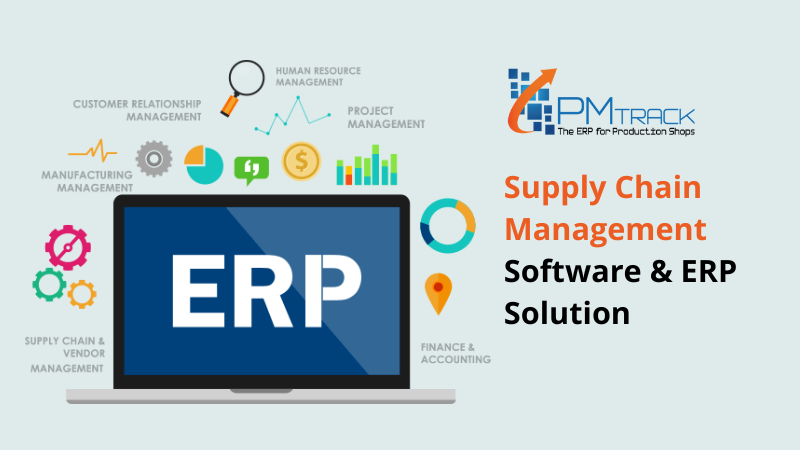
Supply Chain Management Software & ERP Solution

Supply Chain Management Software & ERP Solution

What is the correlation between Supply Chain Management Software & ERP Solutions?

SCM (Supply Chain Management) is an important role for any company, regardless of size. It focuses on obtaining raw materials, producing finished products, monitoring quality control, and ensuring that the product is delivered to the end customer within the time limit stipulated. Enterprise Resource Planning (ERP) software is required by SCM organizations to ensure that all operations function smoothly and efficiently. It also cuts down on resource waste, guarantees that product dimensions are correct, and ensures that sensitive financial data is promptly accessible to all departments.

Core capabilities of Supply Chain Management ERP software

1. Fully integrated into the ERP system

By providing essential business data in real-time with all stakeholders, everyone will have a single perspective.

  • It’s straightforward to integrate the SCM module with your ERP system.
  • It gives each department a consistent picture of your company.
  • You won’t have to pay individually for third-party integrations.
  • Any connected device can upload crucial business data in real-time at any time.
  • An embedded SCM system adds features like centralized procurement and client order sources to the mix.

2. Simplified order and returns management

With the ERP software’s supply chain management module’s complete multi-site capacity feature, ensure the best customer experience by reducing reaction time and lowering expenses. Furthermore, by permitting a wide range of logistic conditions, this module will enable data connectivity and traceability.

  • Order returns are easier with centralized return capabilities. You can return things regardless of when they were delivered or from whatever corporate website they were purchased.
  • Change management and validation ensure that all entities have a single view across all sites and locations.
  • Automated rule-based sourcing, supplier site availability, CTP (Capable to Promise), and multi-site ATP (Available to Promise) capabilities are all part of a reliable order acceptance method.

3. Supply chain management software benefits

The complex delivery processing, put-away, and pick-up capabilities of supply chain management software meet the needs of customers. Other advantages include

  • To minimize time moving between storage bins, define warehouse routes, wave picking, and storage zones for rule-based put away.
  • Set up mobile scanning systems to save time and resources by reducing human error. Furthermore, warehouse data collection, an advanced SCM tool, enhances accuracy and speed by selecting client orders using barcodes.
  • For shelf life, complete up-and-down traceability, and management of expiration dates, creates serial and batch numbers.
  • To keep critical things close at hand, use frequency and slotting-based put away to increase warehouse space.
  • Ensure proper delivery processing by automating cargo procedures and model departure timetables.

4. Forecasting and planning

The supply chain management module contains key planning and forecasting skills that assist businesses in improving customer service, lowering administrative costs, and increasing ROI. It will also help you with:

  • Effective inventory planning and replenishment. This skill allows you to respond quickly and effectively to changing market trends and customer preferences.
  • Improve your predicting skills by using a range of statistical forecasting models, such as Bayesian, Best Fit, Brown’s level, and others. This function will help you obtain the correct amount of raw materials and produce the desired number of finished products on time.
  • Manage a vast number of parts, materials, and finished products accurately and efficiently. Manual parameters such as service level can be created, and parts can be grouped by lifetime stage and frequency.

5. Built for the demands of the future

By utilizing the supply chain management module to reuse, reduce, and recycle things, you may contribute to the circular economy. In this way, waste can be reduced across the supply chain. Other benefits include:

Check to see if your business practices are ecologically friendly, and keep track of your environmental impact. It is more sustainable for a corporation to operate in closed material cycles.

  • The SCM module’s capabilities include return material handling, condition codes, lot batch tracking, serial tracking, and configured parts, to name a few. Working in closed material cycles ensures your business’s sustainability.

Posted By Category: ERP Software
Book A Demo
close slider
×
Show