Tag - erp software company in pune

How AI Is Shaping the Future of ERP Software

How AI Is Shaping the Future of ERP Software

Table of Contents:

1. Introduction

2. AI in ERP software

3. Impact of AI on Manufacturing Industries

4. How PMTRACK ERP Works

5. Key Benefits of Using an AI-Based ERP

6. Conclusion

Introduction

If artificial intelligence and ERP systems work together for the benefit of your organization, they might be a perfect combination. AI enhances ERP capability by broadening what an ERP system can achieve in terms of business automation and optimization.

AI and ERP systems both use technology to accomplish jobs that humans can and do, but with greater effectiveness and efficiency, freeing up humans to devote their time and talents to tasks that need a broader set of skills and functions.

Artificial intelligence (AI) is bringing in a new era for ERP software, converting it from a transaction processing tool to an insight engine that produces significant business improvements. The potential is only now being realized, but the benefits to early adopters are expected to be significant.

In this article, we will look at AI in ERP software, the impact of AI on ERP software, and the Key Advantages of Using an AI-based ERP.

AI in ERP software

AI is increasingly integrated into ERP software, streamlining and automating business processes. It analyzes vast data, providing real-time insights and accurate forecasts for informed decision-making and improved performance.

AI-powered chatbots handle inquiries and tasks, enhancing customer satisfaction and freeing up human agents.

AI algorithms detect patterns and anomalies, detect fraud, mitigate risks, and enhance security in ERP systems. By monitoring transactions and user behavior, AI proactively identifies threats and takes appropriate actions.

The integration of AI in ERP software brings advantages like data analysis, chatbots, and security enhancements, empowering organizations to optimize operations, enhance customer service, and mitigate risks.

As AI technology advances, more sophisticated capabilities will revolutionize how businesses operate.

Impact of AI on Manufacturing Industries

Artificial intelligence (AI) has had a significant impact on manufacturing industries, revolutionizing the way products are designed, produced, and delivered. Here are some key impacts of AI on manufacturing:

1. Automation:

AI has enabled the automation of various manufacturing processes, leading to increased efficiency and productivity. AI-powered robots and machines can perform repetitive tasks with precision and speed, reducing the need for human intervention. This has resulted in improved production rates, reduced errors, and lower operational costs.

2. Predictive Maintenance:

AI algorithms can analyze data from sensors and equipment to predict when maintenance is needed. By detecting potential failures in advance, manufacturers can schedule maintenance activities more effectively, minimizing downtime and optimizing equipment utilization.

3. Quality Control:

AI-powered computer vision systems can inspect products for defects and anomalies with greater accuracy and speed than human inspectors. This ensures that only high-quality products are delivered to customers, reducing waste and improving customer satisfaction.

4. Supply Chain Optimization:

AI algorithms can analyze vast amounts of data to optimize supply chain operations. Manufacturers can use AI to forecast demand, optimize inventory levels, and streamline logistics, resulting in faster delivery times, reduced costs, and improved customer service.

5. Product Design and Optimization:

AI can assist in the design and optimization of products. By analyzing customer preferences, market trends, and historical data, AI algorithms can generate design suggestions and identify areas for improvement. This enables manufacturers to create products that better meet customer needs and preferences.

6. Enhanced Safety:

AI-powered systems can monitor and analyze real-time data from sensors to identify potential safety hazards in the manufacturing environment. This allows manufacturers to take proactive measures to prevent accidents and ensure a safer workplace for employees.

7. Customization and Personalization:

With AI, manufacturers can efficiently customize products to meet individual customer requirements. By leveraging data on customer preferences and using AI algorithms, manufacturers can offer personalized products, leading to increased customer satisfaction and loyalty.

8. Energy Efficiency:

AI can optimize energy consumption in manufacturing processes by analyzing data from sensors and making real-time adjustments. This helps reduce energy waste, lower carbon emissions, and improve sustainability.

Overall, AI has transformed manufacturing industries by improving efficiency, quality, and flexibility. It has enabled manufacturers to adapt to rapidly changing market demands and stay competitive in the global marketplace.

How PMTRACK ERP work?

PMTRACK ERP is a well-known ERP Software Company in Pune. We are recognized in Pune for developing ERP software. We have been providing ERP software for the manufacturing industry for over 17 years, with over 500 clients in Pune, and Maharashtra.

ERP solutions offer to transform your company by giving you unprecedented levels of automation, integration, and control over your day-to-day operations. Among the reputable ERP software providers in Pune, PMTRACK ERP is at the top of the list.

Almost all aspects of your organization can benefit from PMTRACK ERP Software, which streamlines all departments and units of your company, including Sales & CRM, Purchase and Inventory Control, Design and production, Quality Control, the Service, Finance, HR-Payroll, and The Add on Modules.

Key Benefits of Using an AI-Based ERP

There are several key benefits of using an AI-based ERP (Enterprise Resource Planning) system. Some of these benefits include:

1. Improved Efficiency:

AI can automate various tasks, such as data entry, analysis, and reporting, which can save time and reduce human error. This leads to improved overall efficiency in business operations.

2. Enhanced Decision Making:

AI can analyze large amounts of data and provide real-time insights, enabling businesses to make more informed and accurate decisions. This can help optimize processes, identify trends, and uncover new opportunities.

3. Personalized User Experience:

AI can learn from user behavior and preferences to provide a personalized user experience. This can include customized dashboards, reports, and recommendations tailored to individual users’ needs, increasing overall user satisfaction.

4. Predictive Analytics:

AI algorithms can analyze historical data to identify patterns and trends, enabling businesses to make predictions about future outcomes. This can help in forecasting demand, optimizing inventory levels, and improving supply chain management.

5. Proactive Issue Resolution:

AI can monitor data in real-time and identify potential issues or anomalies. This allows businesses to address problems before they escalate, minimizing downtime and improving customer satisfaction.

6. Automation of Routine Tasks:

AI can automate repetitive and routine tasks, freeing up employees’ time to focus on more strategic and value-added activities. This can lead to increased productivity and higher levels of employee satisfaction.

7. Improved Customer Service:

AI-powered chatbots and virtual assistants can provide instant and personalized support to customers, enhancing the overall customer experience. This can include answering inquiries, providing product recommendations, and resolving issues promptly.

8. Cost Reduction:

By automating tasks and optimizing processes, AI-based ERP systems can help reduce operational costs. This includes minimizing errors, eliminating manual data entry, and optimizing resource allocation.

Overall, using an AI-based ERP system can lead to improved efficiency, better decision-making, enhanced user experience, and cost savings for businesses.

Conclusion

Users will benefit from intelligent business automation systems that streamline activities, minimize human errors, cut expenses, and increase productivity and efficiency by merging ERP and AI.

AI is undoubtedly influencing the Future of ERP software, revolutionizing how firms function and manage their resources. AI is improving the efficiency, accuracy, and efficacy of ERP systems by automating operations, analyzing data, and making intelligent judgments.

ERP systems were already highly effective. However, artificial intelligence has taken it to a whole new level of efficiency and automation. Working with vast amounts of data can lessen the need for human interaction and increase the quality of decision-making.

As a result, it is critical to keep ERP software updated in order to improve performance. It ensures maximum business performance and increases process efficiency. Companies would reap the greatest benefits from its remarkable potential.

Our trained software professionals are ready to provide their expertise in AI, ERP, and technology in general. Call +91-8600004221 or request a demo today to learn more about PMTRACK ERP.
Posted By Category: ERP Software
Benefits of Integrating ERP and Warehouse Management Systems

Benefits of Integrating ERP and Warehouse Management Systems

Table of Contents:

1. Introduction

2. Top Benefits of Integrating ERP and Warehouse Management Systems

3. How PMTRACK Help

4. Conclusion

Introduction

In the current dynamic and aggressively competitive business environment, companies are consistently searching for methods to optimize their operations, boost efficiency, and raise overall productivity.

One of the key areas where businesses can achieve significant gains is through the integration of Enterprise Resource Planning (ERP) and Warehouse Management Systems (WMS). This powerful combination brings together the core functionalities of managing business processes and optimizing warehouse operations, resulting in a seamless and efficient supply chain.

The integration of ERP and WMS offers a wide range of benefits that can revolutionize how businesses manage their inventory, fulfill orders, and meet customer demands. From improved inventory management to enhanced supply chain visibility, these benefits can have a profound impact on a company’s bottom line and overall success.

In this blog post, we will explore the top benefits of integrating ERP and WMS, exploring how this integration can drive operational excellence and unlock new opportunities for businesses. By understanding the advantages of this integration, companies can make informed decisions and leverage technology to stay ahead of the competition.

Top Benefits of Integrating ERP and Warehouse Management Systems

1. Improved Inventory Management:

By integrating ERP and warehouse management systems, businesses can have real-time visibility into their inventory levels and locations. This helps in reducing stockouts, minimizing overstocking, and optimizing inventory levels.

2. Streamlined Order Fulfillment:

With the integration of ERP and warehouse management systems, businesses can automate their order fulfillment process. This ensures that orders are picked, packed, and shipped accurately and efficiently, leading to improved customer satisfaction.

3. Enhanced Supply Chain Visibility:

Integration of ERP and warehouse management systems provides businesses with end-to-end visibility into their supply chain. This allows them to track the movement of goods, monitor delivery times, and identify any bottlenecks or delays in the process.

4. Increased Operational Efficiency:

By integrating ERP and warehouse management systems, businesses can eliminate manual data entry and streamline processes. This reduces the chances of errors, improves productivity, and reduces operational costs

5. Better Demand Planning:

Integration of ERP and warehouse management systems enables businesses to have better visibility into customer demand patterns. This helps in improving demand planning and forecasting accuracy, leading to reduced stockouts and improved customer satisfaction.

6. Real-time Reporting and Analytics:

Integration of ERP and warehouse management systems provides businesses with real-time reporting and analytics capabilities. This allows them to gain insights into their warehouse operations, identify areas for improvement, and make data-driven decisions.

7. Improved Customer Service:

By integrating ERP and warehouse management systems, businesses can provide better customer service. Real-time inventory visibility, accurate order processing, and faster order fulfillment lead to improved customer satisfaction and loyalty.

8. Scalability and Flexibility:

Integration of ERP and warehouse management systems helps businesses in maintaining compliance with industry regulations and standards. It enables accurate tracking and tracing of products, ensuring that businesses can meet regulatory requirements and provide necessary documentation when needed.

9. Compliance and Traceability:

Integration of ERP and warehouse management systems helps businesses in maintaining compliance with industry regulations and standards. It enables accurate tracking and tracing of products, ensuring that businesses can meet regulatory requirements and provide necessary documentation when needed.

10. Cost Savings:

By integrating ERP and warehouse management systems, businesses can achieve cost savings in various areas. These include reduced inventory holding costs, improved labor productivity, optimized transportation costs, and reduced order processing errors.

How PMTRACK ERP Help

PMTRACK is a helpful tool that can facilitate the integration of Enterprise Resource Planning (ERP) and Warehouse Management Systems (WMS). Here are some ways in which PMTRACK can assist in this integration:

1. Data synchronization:

PMTRACK ensures that data between the ERP and WMS systems is synchronized in real-time. This means that any updates or changes made in one system will automatically be reflected in the other. This helps to eliminate data discrepancies and ensures accuracy across both systems.

2. Order management:

We streamline the order management process by providing a centralized platform to track and manage orders. It allows for seamless communication between the ERP and WMS systems, ensuring that orders are efficiently processed and fulfilled

3. Inventory management:

we provide real-time visibility into inventory levels across multiple locations. This helps to optimize inventory planning and reduce stockouts or overstock situations. The integration with the WMS system allows for accurate tracking of inventory movements, ensuring that inventory data in the ERP system is always up to date.

4. Warehouse operations optimization:

PMTRACK ERP enables the automation of warehouse operations by integrating with the WMS system. This includes functionalities such as automated picking, packing, and shipping processes. The integration ensures that data flows seamlessly between the ERP and WMS systems, resulting in improved efficiency and reduced manual errors.

5. Reporting and analytics:

We offer comprehensive reporting and analytics capabilities. By integrating with the ERP and WMS systems, it can consolidate data from both systems to provide valuable insights into warehouse and supply chain performance. This empowers businesses to make informed decisions based on data and identify areas for improvement, enabling continuous growth and optimization.

Overall, PMTRACK ERP plays a crucial role in integrating ERP and WMS systems by ensuring data synchronization, streamlining order and inventory management, optimizing warehouse operations, and providing valuable reporting and analytics capabilities.

PMTRACK ERP provides Enterprise Resource Planning in a highly sophisticated way. Instead of SAAS-based solutions, we choose customized ERP. Custom ERP Solution gives you the advantage of modifying the ERP functionality to meet your needs. Known ERPs on the market can be tailored by PMTRACK ERP to work best for your company. We also create unique ERP from scratch in accordance with client needs.

Conclusion:

The benefits of integrating ERP Supply Chain Management Software might be worth millions of dollars. In terms of ROI, investing in this software might provide you with a solution to better manage your business and its processes.

Because the advantages of Enterprise Resource Planning in supply chain management can significantly improve your business’s efficiency, it can also multiply earnings for you. ERP and Warehouse Management System integration is a strategic step towards operational excellence and growth. The benefits are actually transformational, ranging from improved inventory management to automated warehouses and data-driven decision-making.

Take the first step towards a more efficient future by evaluating ERP-WMS integration and watch your business develop. You may also speak with ERP Software Company Experts in Pune to identify the best option for your company. Contact PMTRACK ERP today by calling +91-8600004221 or request for a demo.


Posted By Category: ERP Software
Why is a Custom Automotive ERP Solution Better for Manufacturers?

Custom Automotive ERP Solution for Manufacturers

Table of Contents:

1. Why Automotive Industry Need ERP System?

2. Challenges in The Automotive Industry

3. Why Is It Better to Develop a Custom Solution?

4. Conclusion

Automotive manufacturers are under severe pressure to meet rising demand for electric vehicles, mobility, and smart vehicles with autonomous systems. They must maintain client expectations while providing high-quality autos.

All of these issues might have an impact on automotive plants and supply networks. Automotive ERP software can assist you in meeting these complications while also providing a cost-effective solution to improve efficiency, productivity, and profitability.

A Custom Automotive ERP Solution enhances customer satisfaction by streamlining operations, reducing lead times, and ensuring product quality. This fosters customer loyalty, strengthens reputation, and attracts new business opportunities.

A custom ERP solution offers real-time data and analytics, empowering manufacturers to make informed decisions and respond quickly to market demands. This enables effective resource management, and budget allocation, and ensures a competitive edge.

A custom ERP solution empowers automotive manufacturers with agility and responsiveness to adapt to market conditions and customer demands through quick production schedule adjustments, efficient inventory management, and prompt customer order response.

Why Automotive Industry Need ERP System?

A Custom Automotive ERP Solution enhances customer satisfaction by streamlining operations, reducing lead times, and ensuring product quality. This fosters customer loyalty, strengthens reputation, and attracts new business opportunities.

The automotive industry requires efficient management to navigate its complexities and competitiveness. An ERP System addresses these challenges by enabling effective supply chain management, streamlining production processes, facilitating inventory management, providing comprehensive financial management capabilities, and promoting collaboration.

By integrating functions like demand forecasting, inventory tracking, and supplier management, manufacturers can optimize procurement processes, reduce costs, and ensure timely material delivery.

Real-time visibility into manufacturing operations helps optimize production schedules, allocate resources effectively, and monitor quality control. Efficient inventory management prevents stockouts or excess inventory, minimizing costs.

Comprehensive financial management capabilities improve control over financial processes, accuracy, and informed decision-making. Data integration and centralization promote collaboration and communication, enhancing efficiency and productivity. Overall, implementing an ERP system empowers automotive manufacturers to adapt to market conditions and customer demands, driving growth and success.

Challenges in The Automotive Industry

1. The automotive industry faces numerous challenges that require constant adaptation and innovation to stay competitive in today’s market. One significant challenge is the increasing demand for eco-friendly and sustainable vehicles. Stricter emissions regulations and a growing consumer preference for electric and hybrid cars have forced automotive manufacturers to invest heavily in research and development to meet these evolving demands.

2. Another challenge is the rapid advancement of technology and the need to integrate it into vehicles. The rise of autonomous driving, connected cars, and advanced safety features require automotive companies to invest in cutting-edge technologies and develop the necessary expertise to stay ahead in this digital age.

3. Supply chain management is a different critical challenge in the automotive industry. Manufacturers must carefully manage their suppliers to ensure a steady supply of high-quality components while also mitigating risks such as disruptions caused by natural disasters or geopolitical factors.

In addition, the global nature of the industry presents challenges related to market fluctuations, currency exchange rates, and varying regulations across different countries. Automotive companies must navigate these complexities to maintain profitability and sustain growth.

In the end, the industry faces intense competition, both from traditional automakers and new entrants such as tech companies and startups. To thrive in this highly competitive landscape, automotive companies must continuously innovate, differentiate their products, and provide exceptional customer experiences.

In short, the automotive industry faces challenges related to sustainability, technology integration, supply chain management, global complexities, and fierce competition. Overcoming these challenges requires constant adaptation, investment in research and development, strategic partnerships, and a customer-centric approach.

Why Is It Better to Develop a Custom Solution?

Developing a custom solution offers several advantages over using off-the-shelf software or pre-built solutions. Here are some reasons why it is better to develop a custom solution:

1. Tailored to Specific Needs:

A custom solution is designed to meet the unique requirements of your business. It can be tailored to fit your processes, workflows, and industry-specific needs. This ensures that the solution aligns perfectly with your business goals and enhances operational efficiency.

2. Scalability and Flexibility:

Custom solutions can be designed to scale as your business grows. They can accommodate future expansion, additional features, and increased user load. Additionally, custom solutions offer flexibility in terms of customization and integration with existing systems, allowing you to adapt to changing business needs and technologies.

3. Competitive Advantage:

A custom solution gives you a competitive edge by providing unique functionalities and features that are not available in off-the-shelf software. It allows you to differentiate your business and offer a more personalized experience to your customers, leading to increased customer satisfaction and loyalty.

4. Enhanced Security:

Custom solutions offer enhanced security measures tailored to your specific requirements. You have full control over the security protocols, data encryption, and access control, reducing the risk of data breaches and unauthorized access.

5. Cost-effectiveness in The Long run:

Although there may be higher upfront costs associated with developing a custom solution compared to using off-the-shelf software, it can prove to be more cost-effective in the long run. Custom solutions eliminate the need for ongoing licensing fees and costly customization of pre-built software. They also reduce the risk of productivity loss due to software limitations or compatibility issues.

6. Ownership and Control:

With a custom solution, you have full ownership and control over the software. You are not dependent on a third-party vendor for updates, maintenance, or support. This gives you the freedom to make changes, updates, and improvements as needed without relying on external parties.

Conclusion

The automotive business is changing, and companies must adapt or risk being left behind. As a result, several automakers are increasingly turning to automotive software to differentiate themselves from the competition and respond to changing customer needs.

The power of Custom Automotive Solutions creation enables a company to communicate with users via their smartphones. Personalization will keep people interested and raise the average bill.

Contact PMTRACK ERP today by calling +91-8600004221 or request a demo to learn more about how businesses in the manufacturing industry are benefiting from custom ERP software, or to speak with an experienced Custom ERP Development team about creating custom enterprise resource planning solutions for your business.


The Future of ERP: Predictions & Trends For 2023

The Future of ERP: Predictions & Trends For 2023

Table of Content:

1. Here are the top 11 ERP trends for 2023

2. The Future of ERP

3. Conclusion

As the year 2023 approaches, Enterprise Resource Planning (ERP) systems undergo considerable changes. ERP Software has formed the backbone of company operations, streamlining procedures, integrating data, and allowing companies to make data-driven decisions.

Because the business world is becoming digital-first, businesses require enterprise applications that enable them to be more nimble and make decisions based on clean, real-time data in order to improve performance and guide strategy. The old processes and systems are no longer functional; 2023 is the year to be brave and exploit the future of ERP.

The PMTRACK ERP system evolves and changes in conjunction with the evolution of business trends. More modern technologies are always being added to the system’s functionality to assist users to remain nimble in a fast-changing environment.

In this blog post, we will look at the Improvements and Trends in The ERP field for 2023. Let us investigate the ERP projections for the future to determine the location.

Here Are the Top 11 ERP Trends For 2023

1. Cloud-based ERP:

More organizations will adopt cloud-based ERP solutions to improve scalability, flexibility, and accessibility.

The cloud-based ERP trend will continue to grow in 2023, as organizations recognize the benefits of scalability, flexibility, and cost-effectiveness offered by cloud-based solutions.

Cloud-based ERP systems eliminate the need for on-premises infrastructure, allowing organizations to access their ERP software and data securely from anywhere, anytime.

With cloud-based ERP, organizations can easily scale their operations, integrate with other cloud services, and benefit from automatic updates and maintenance, enabling them to focus on their core business activities.

2. Artificial Intelligence (AI):

AI-powered capabilities, such as machine learning and predictive analytics, will be integrated into ERP systems to automate processes, gain insights, and enhance decision-making.

The artificial intelligence (AI) trend in ERP systems will gain significant traction in this year, as organizations seek to automate processes, improve decision-making, and enhance user experiences.

AI-powered ERP systems will leverage machine learning algorithms and natural language processing to analyze data, predicts outcomes, and provides intelligent recommendations for optimizing business operations.

By integrating AI into ERP, organizations can streamline workflows, reduce manual tasks, and gain valuable insights from data, ultimately driving efficiency, productivity, and innovation in their operations.

3. Blockchain Integration:

ERP systems will integrate blockchain technology to enhance data security, transparency, and trust in supply chain management and financial transactions.

The integration of blockchain technology into ERP systems will become a prominent trend in 2023, as organizations recognize the potential for enhanced security, transparency, and traceability in their business processes.

Blockchain integration in ERP will enable organizations to securely record and verify transactions, create immutable audit trails, and streamline supply chain management by tracking goods from production to delivery.

With blockchain integration, organizations can reduce fraud, increase trust among stakeholders, and simplify compliance with regulations, ultimately improving efficiency and fostering a more secure and trustworthy business environment.

4. IOT Integration

IoT integration will be a key ERP trend in 2023, as organizations seek to leverage real-time data from connected devices to enhance operational efficiency and decision-making.

ERP systems will increasingly connect with IoT devices such as sensors, wearables, and smart machines, enabling organizations to gather valuable insights and optimize processes.

The integration of IoT with ERP will enable organizations to monitor and track assets, automate inventory management, and improve supply chain visibility.

By harnessing the power of IoT integration, ERP systems in 2023 will empower organizations to unlock new levels of productivity, agility, and innovation.

5. Mobile ERP:

Mobile accessibility will become a standard feature in ERP systems, allowing users to access and manage data anytime, anywhere.

As businesses realize how important it is to manage vital company data while on the go, mobile ERP will remain a prominent trend in 2023.

With mobile ERP, users can conveniently access real-time information, collaborate with team members, and make informed decisions from anywhere, using their smartphones or tablets.

Mobile ERP apps will offer intuitive user interfaces, personalized dashboards, and seamless integration with other business systems, providing a seamless and efficient user experience.

The adoption of mobile ERP will enable organizations to enhance productivity, responsiveness, and agility by enabling employees to stay connected and productive even when they are away from their desks.

6. Advanced Analytics:

ERP systems will offer more advanced analytics capabilities, including data visualization, data mining, and predictive modeling, to derive actionable insights from vast amounts of data.

The advanced analytics trend in ERP systems will gain momentum in this year, as organizations recognize the value of deriving actionable insights from vast amounts of data.

ERP systems will offer advanced analytics capabilities, such as data visualization, data mining, and predictive modeling, to help organizations make informed decisions and identify trends and patterns.

With advanced analytics integrated into ERP systems, organizations can gain a deeper understanding of their operations, customer behavior, and market trends, enabling them to optimize processes and drive business growth.

By leveraging advanced analytics in ERP, organizations will be able to proactively identify opportunities, mitigate risks, and improve overall performance, leading to a competitive advantage in the market.

7. Automation and Robotics:

ERP systems will integrate with automation and robotics technologies, enabling organizations to automate repetitive tasks and streamline operations. Automation and robotics will play a crucial role in ERP software services, streamlining processes and increasing efficiency, leading to improved productivity and cost savings.

8. Enhanced Cyber Security:

ERP systems will prioritize cybersecurity measures, including multi-factor authentication, data encryption, and threat detection, to protect sensitive business data.

The enhanced cybersecurity trend will be a top priority in 2023 as organizations recognize the increasing threats and risks associated with cyberattacks and data breaches.

Organizations will invest in advanced cybersecurity measures such as AI-powered threat detection, multi-factor authentication, and encryption to protect their sensitive data, systems, and networks from unauthorized access and malicious activities.

9. Industry-specific ERP Solutions:

ERP vendors will develop industry-specific solutions tailored to the unique needs of sectors such as manufacturing, healthcare, retail, and logistics.

The trend of industry-specific ERP solutions will continue to rise in 2023, as organizations seek tailored software that caters to the unique needs and requirements of their specific industry.

Industry-specific ERP solutions offer specialized features, workflows, and integrations that enable organizations to optimize their operations, comply with industry regulations, and gain a competitive advantage in their respective markets.

10. Integration With Other Business Systems:

ERP systems will seamlessly integrate with other business systems, such as CRM, HR, and supply chain management, to achieve end-to-end process optimization and data synchronization.

11. Enhanced User Experience:

ERP systems will focus on improving user interfaces, personalization options, and overall user experience to increase user adoption and productivity.

The latest ERP trends are centered on improving user experience by incorporating features such as mobile accessibility, streamlined workflows, and personalized dashboards. These advancements aim to empower users with a seamless and efficient ERP experience, ultimately leading to increased productivity and user satisfaction

The Future of ERP

The future of ERP (Enterprise Resource Planning) looks promising as technology continues to advance. With the advent of artificial intelligence (AI) and machine learning, ERP systems are becoming more intelligent and capable of handling complex business processes. These advanced systems can automatically analyze data, identify patterns, and make predictions, enabling businesses to make more informed decisions and streamline their operations.

One key trend in the future of ERP is the integration of IoT (Internet of Things) devices. By connecting various devices and sensors to the ERP system, businesses can collect real-time data on production, inventory, and customer behavior. This data can then be used to optimize processes, improve efficiency, and provide better customer experiences.

Another important aspect of the future of ERP is cloud computing. Cloud-based ERP systems offer numerous benefits, such as easy scalability, cost-effectiveness, and remote access. With cloud ERP, businesses can access their data and applications from anywhere, anytime, and scale their resources up or down as needed. This flexibility is particularly valuable for businesses with multiple locations or remote teams.

Furthermore, the future of ERP is likely to see a greater emphasis on customization and personalization. Businesses will be able to tailor their ERP systems to meet their specific needs and preferences, allowing for more efficient and effective operations. Additionally, ERP systems will become more user-friendly, with intuitive interfaces and simplified workflows, making it easier for employees to navigate and utilize the system.

Conclusion

It is encouraging to see well-known ERP companies in India following trends and incorporating cutting-edge functionality into their ERP software. However, in the end, businesses require stability and predictability. Because of this, market leaders in ERP include SAP NetSuite, SAP S/4HANA Cloud, SAP ECC, Microsoft Dynamics 365 Business Central, SAP Business One, or SAP Business One. These ERPs include contemporary technologies while maintaining their inherent predictability.

The future of ERP is bright, with advancements in AI, IoT integration, cloud computing, and customization. These developments will enable businesses to harness the power of data, optimize their processes, and make more informed decisions. As technology continues to evolve, ERP solution in Pune will play a pivotal role in helping businesses stay competitive and thrive in the ever-changing business landscape.

At the end of the day, the market will choose the Best ERP Company in India that can continue to provide proven answers to difficulties that businesses confront while also developing new functionalities. If you’re looking for an ERP that can balance stability and cutting-edge functionality, you have come to the right place. To create a reliable and secure company process, contact PMTRACK ERP.


Posted By Category: ERP Software
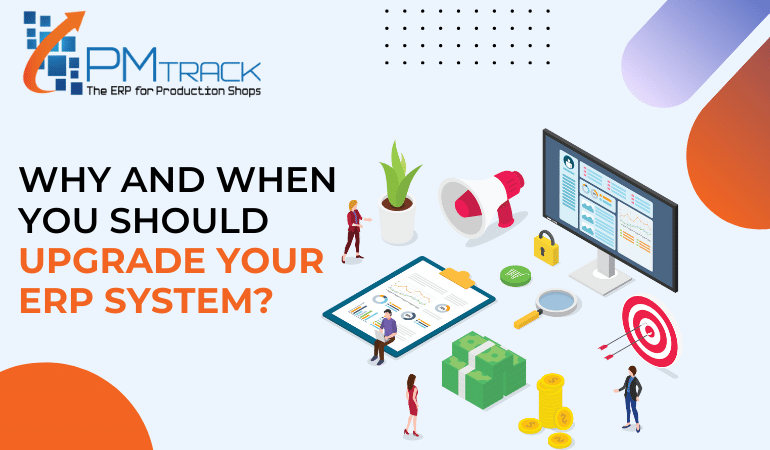
Why And When You Should Upgrade Your ERP System

Why And When You Should Upgrade Your ERP System?

Upgrading an ERP system is a huge undertaking. Contrary to popular belief, we do not recommend an ERP upgrade unless the circumstances require it. We’ve listed the seven most common reasons why businesses upgrade their ERP system, as well as how to tell if it’s time to upgrade your company’s financials or ERP system. We recommend that businesses only consider upgrading if they are experiencing one of these problems.

What exactly is an ERP upgrade?

When we talk about upgrading your ERP System, we’re referring to two distinct types of ERP upgrades:
The first type of upgrade we’ll look at is the literal kind. Assume you’re using version 10 of a software package and want to upgrade to 11.2, the most recent version. It’s the same application and the same vendor; it’s just a different version. These updates, particularly in cloud-based applications, occur frequently and frequently without your knowledge.

The second type of upgrade is when you want to move to a better system, similar to when you move from a house to an apartment or from a Toyota to a Lexus. So, if you are in charge of software systems in your company and believe the time has come to upgrade to a better system that is the type of ERP upgrade we will look at in greater depth here.

Why Should You Upgrade Your ERP System?

Here are seven straightforward reasons why upgrading your ERP system is worthwhile:

1. Systems of Higher Quality

There is no doubt that information systems are rapidly evolving. Software that is ten or even five years old may already be obsolete. The quality of ERP Software is rapidly improving, and we are all looking for the best. The better you’re ERP System, the better you will support your business and be more successful.

2.Improved Performance

When it comes to ERP Software, performance is always an issue. This is due to the fact that performance issues can be complicated. is there a problem with the software? is it a server problem? Are the connections faulty? ERP Software performance issues become more common and problematic over time. Performance can be improved by upgrading to a new and modern ERP Solution and auditing the entire it environment.

3.Improved User Productivity

One of the most important reasons for companies to upgrade their ERP System is to enable their employees to do more in less time. Less time spent on administrative tasks, faster insight into critical data, or simply a more enjoyable job with the new software. All of this leads to happier and more productive employees, which drives your company’s results.

4.Improved Process Productivity

ERP Software facilitates business processes. When you upgrade your system, you examine your business processes critically. Most software vendors will even begin with a diagnostic phase to analyse your process flows and how the software can automate them.

5.Departmental Collaboration Has Improved.

If you are still using multiple software applications across departments, you need an ERP System to streamline processes and provide on-demand access to data stored in a centralised database to your employees.
This data unification enables improved communication throughout the organisation. Your sales team, for example, would be aware of what inventory is being procured; your administration team would be aware of what your service team is doing, and so on. This improved collaboration has resulted in increased efficiency and employee engagement.

6.Integration with Other Software Is Simple.

The most important feature of ERP Systems today is modular software with easy integration capabilities. A modular structure allows you to pick and choose which components are best for your business and leave out those that aren’t. Extensive integration allows you to build a centralized software architecture that can connect and pass data between other systems. This effectively eliminates bottlenecks, shortens communication delays, and improves data accuracy, allowing your business to run more efficiently and with fewer human errors.

7.Cost Savings

Over time, upgrading your ERP System will save you money. When you replace out-dated technology that no longer provides the desired output with new technology, your business processes improve and your productivity rises.
Instead of manually entering data, the new system would allow you to enter information once and store it in a centralised database, making it available in real-time to all departments. it also allows you to automate redundant tasks, allowing you to invest in the workforce for higher-priority tasks.

When to Upgrade Your ERP System?

Now that you understand why you should update your erp system, it’s time to figure out when you should do it. Look for the following signs:

  • You are experiencing business growth, and increasing the capacity of your existing ERP system to accommodate the increased data and users is either impossible or prohibitively expensive.
  • You have outgrown legacy technology, and your rigid software is incapable of supporting new and more efficient business operations.
  • You have out-of-date user interfaces that are difficult to navigate or require additional steps to access data.
  • You are failing to meet the data reporting and analysis speed required to keep up with today’s business.
  • You are implementing a hybrid work model with no mobile device support.

Do You Really Need This Upgrade?
Upgrading your ERP system without first conducting an evaluation could result in a worse outcome than you had hoped for. Begin by determining your business requirements and the need for modernizing your ERP system. We can assist you in analyzing this and guiding you through the ERP implementation process.

PMTRACK ERP provides the best, ERP solution for the manufacturing industry , to schedule a free demo, get in touch with our team at info@pmtrackerp.in


Posted By Category: ERP Software
erp importance in 2020

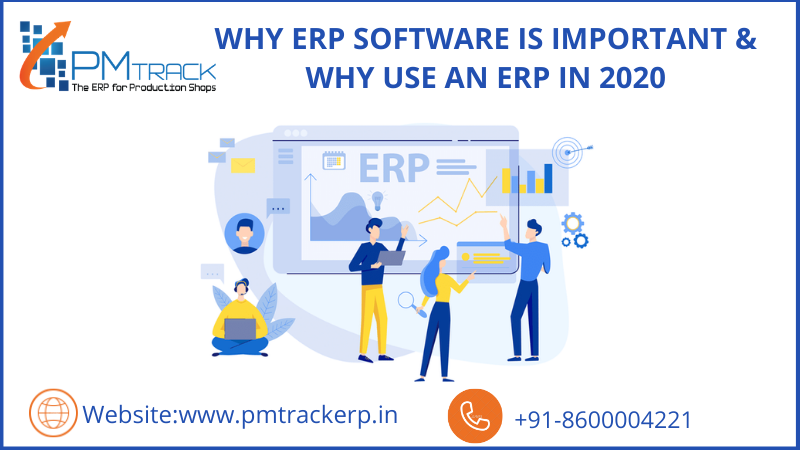
Why ERP Software Is Important & Why Use An ERP In 2020

An ERP usage includes introducing the product, moving your money related information over to the new framework, arranging your clients and cycles, and preparing your clients for the product. Whenever you have chosen your ERP solution. You can get the best ERP software in Pune. The PMTrack is the top ERP company in Pune The subsequent stage is executing ERP framework programming. With your group collected, the phases of usage become possibly the most important factor.

The important factors are:

1. Disclosure
Consists of cycles that help characterize the need, vision, extent of the venture, and acquire responsibility from the client to proceed.

2. Plan and Monitor
Consists of cycles that include building up a system to finish the work, just as measure the advancement and make the restorative move as required. This happens throughout the whole cycle.

3. Examine
This stage is a more definite degree of disclosure and comprises of cycles that include gathering nitty-gritty prerequisites and breaking down the customer’s business needs.

4. Manufacturer
Involve measures that complete the errands recognized in the methodology.

5. Settle
Consists of a bunch of cycles to guarantee an answer meets the customer’s necessities and is prepared for full sending to a live creation climate.

6. Send
Processes that will convey the answer for a creative climate.

7. Post Go Live
Processes that are set up to help the customer once they are live on the arrangement, which leads to extending the conclusion.

How to Choose the Right Solution

With any huge programming buy, it’s imperative to comprehend the means required to guarantee the acquirement measures runs as easily as could be expected under the circumstances. Choosing any product answer for your business, paying little mind to its expected degree of utilization, can be an overwhelming and tedious assignment, with numerous possible entanglements route.

1.Framework prerequisites

Before your business even starts to contact conceivable ERP framework merchants, it is basic that your business has an away from what they need from a planned framework. With ERP frameworks ordinarily working across numerous divisions, it is significant that those included inside the obtainment measures counsel every individual who will be in contact with the framework, from end clients to ranking directors.

2.Organization objectives

Just as setting up your prerequisites from any forthcoming framework right off the bat, it is likewise critical to consider how you visualize another ERP framework helping the business with accomplishing its organization objectives, both short and long haul.

3.Framework combination

Choosing an ERP arrangement that can’t incorporate with frameworks that are presently effectively being used inside your business could prompt superfluous expenses and issues, with the advantages you secure from your new ERP framework liable to be predominated by the issues that it has caused in different zones.

Primary Benefits of ERP system

There are various benefits of the ERP system as discussed below:

1.Improved Process Efficiency

An ERP stage disposes of dreary cycles and extraordinarily lessens the need to physically enter data, which improves client profitability, however it wipes out the chance of off-base information which could prompt the creation of expensive business botches. The advantages of executing an ERP framework in an association will likewise improve everyday business exercises by smoothing out business measures, which makes it simpler and more productive.

2.Exact Forecasting

Venture asset arranging programming gives your clients, and particularly chiefs, the instruments they have to make more precise figures. This helps programming clients, and organizations overall, think ahead and appropriately plan what they need from stock and deals down to financials and client assistance. With more grounded determining, organizations can adequately diminish business costs, which sets aside cash just as become a more generally proactive unit.

3.Versatile Resource

Did you know? Organized ERP frameworks permit the expansion of new clients and capacities to develop the at first executed arrangement over the long haul. There is no stress over whether you will require a fresh out of the plastic new framework once another client or two should be added.

How to Decide Your Business Needs ERP?

1.There are Different Software for Different Processes

ERP programming incorporates these frameworks so every business work depends on a solitary information base. With one wellspring of data that contains precise, constant information, an ERP solution separates data logjams, assists staff with settling on better choices all the more rapidly, and saves their opportunity to chip away at all the more high-esteem practices like helping the business become considerably quicker.

2. Access to information about Your Business is not easy

The movement of business is quicker than any time in recent memory, which implies representatives over your organization need prompt admittance to key information. With an ERP solution, heads can get an all-encompassing perspective on business activities whenever, while other staff can get the data, they have to manage their responsibilities all the more viably.

3.Bookkeeping Takes Longer and Is More Difficult

The equivalent goes for money related detailing if it takes ages to unite or accommodate monetary data across frameworks and through incalculable accounting pages, an ERP arrangement can have a huge effect. With all financials in a solitary information base, bookkeeping staff won’t need to go through hours cross-posting data, rekeying numbers, or accommodating information physically.

4.Deals and Customer Experience Are Suffering

With an ERP framework, then again, staff in each division will approach the equivalent, expert data. Client confronting reps ought to have the option to address the client’s inquiries concerning request and delivery status, installment status, administration issues, and so on, without hanging up the telephone and check with another office.

Measuring the Performance and ROI of ERP

It is reasonable for organizations to gauge the ROI of each drawn out speculation for assessing programming execution yet, numerous associations neglect to comprehend the correct method of ascertaining their profit for ERP venture. This is because they ignore the significance of assessing and archiving their targets of actualizing and ERP before the rollout. Albeit emotional, this assessment and documentation fill in as a base for ascertaining ROI in the more drawn outrun. Subsequently, to effectively quantify the ROI, it is significant for organizations to follow certain means and techniques. You can get top companies of ERP In Pune.PMTrack is the top ERP software company in Pune on which you can trust.

The formula for calculating ROI:

return on initial capital investment = [(Value of venture – Cost of speculation)/Cost of investment] * 100%

In the first place, begin allocating worth and courses of events to every one of your destinations to have the option to compute Net Revenue after its usage. For example, a 30% decrease in crude material wastage or a 40% decrease in over-loading. This will assist you with measuring the ROI at a later stage by taking away the securing costs from advantages and afterward separating it by the expense of obtaining (preparing cost, new labor prerequisite, worker hours required, execution time, and so on).

PM TRACK ERP provides the best ERP solution for the manufacturing industry all over India, to schedule a free demo, get in touch with our team info@cloud9technologies.in


Posted By Category: PMTRACK ERP
Book A Demo
close slider
×
Show