Tag - ERp software For Manufacturing

Transforming Supply Chain Management (SCM) with Cloud ERP Software Solutions

Transforming Supply Chain Management (SCM) with Cloud ERP Software Solutions

In today’s competitive manufacturing environment, efficient Supply Chain Management (SCM) is essential for maintaining productivity, reducing costs, and meeting customer expectations. Traditional supply chains often struggle with fragmented data, poor coordination, and delayed decision-making. This is where Cloud ERP Software Solutions play a crucial role. By integrating procurement, production, inventory, logistics, and financial processes into one centralized platform, cloud ERP systems help businesses streamline operations and gain real-time visibility across the entire supply chain.

Adopting ERP software for manufacturing has emerged as a crucial stage in the digital transformation process for manufacturers. Cloud-based ERP systems enhance departmental, supplier, and distributor cooperation while helping businesses manage supply chain activities more effectively.

1. Real-Time Visibility Across the Supply Chain

Real-time supply chain operations visibility is one of the biggest benefits of Manufacturing ERP Software Solutions. Cloud ERP systems enable firms to track every phase of the supply chain, from sourcing raw materials to delivering finished goods, by centralizing data from procurement, inventory, production, and logistics.

Because of this transparency, producers are better able to spot production bottlenecks, inventory shortages, and delays and take prompt corrective action. Better demand forecasting is also made possible by real-time data, which helps businesses avoid excess inventory or stockouts and match production schedules with market demand.

2. Improved Collaboration and Supplier Management

Suppliers, producers, and distributors are connected on a single digital platform via modern ERP software for the manufacturing industry. Stakeholder coordination and communication throughout the supply chain are improved by this integration.

Using consolidated data, cloud ERP solutions enable companies to monitor supplier performance, handle purchase orders, and assess supplier dependability. This strengthens ties with suppliers and guarantees a consistent supply of raw materials required for manufacturing.

Cloud-based systems can facilitate smooth data sharing and allow organizations utilizing ERP for Manufacturing Industry in Pune coordinate activities across numerous facilities, warehouses, and distribution hubs.

3. Automation of Supply Chain Processes

Manual supply chain processes often lead to errors, delays, and inefficiencies. Cloud ERP Software Solutions in Pune help automate routine operations such as inventory tracking, order processing, purchase approvals, and shipment management.

Automation speeds up departmental procedures and lowers human error. To ensure continuous production, ERP systems, for instance, might automatically initiate purchase orders when inventory levels drop below predetermined criteria.

Manufacturers can greatly lower operating expenses and increase overall productivity using automated supply chain procedures.

4. Data-Driven Decision Making

Strong analytics and reporting capabilities that convert unprocessed data into useful insights are features of contemporary manufacturing ERP software solutions in Pune. Businesses may make well-informed decisions about inventory planning, supplier selection, and production scheduling by examining past data, market trends, and operational indicators.

Additionally, advanced analytics assist businesses in identifying possible supply chain risks and making more accurate demand forecasts. Organizations can increase operational effectiveness and react swiftly to changes in the market thanks to these insights.

5. Scalability and Flexibility for Growing Businesses

Scalability is another important benefit of Cloud ERP Software Solutions. Cloud ERP software enables businesses to scale their operations as they expand, in contrast to traditional ERP systems that necessitate significant infrastructure expenditures.

Cloud ERP solutions can readily adjust to shifting business needs, whether a manufacturing company is growing its production capacity or breaking into new markets. Cloud ERP is a great option for enterprises that want to future-proof their supply chain operations because of its flexibility.

6. Enhanced Supply Chain Efficiency

Production planning, procurement, inventory control, and logistics are all integrated into a single system via cloud ERP systems. All departments will use the same data and adhere to standard operating procedures thanks to this connectivity.

Manufacturers are able to eliminate manufacturing delays, shorten lead times, and increase delivery accuracy as a result. Real-time monitoring and automated workflows can assist businesses in removing inefficiencies and ensuring seamless supply chain operations.

7. Cost Reduction and Improved Customer Satisfaction

Customer satisfaction is directly impacted by effective supply chain management. ERP Software Company in Pune solutions help firms produce goods on schedule and with consistent quality by streamlining production planning and order fulfillment.

Higher profitability and better customer relations are eventually the results of lower inventory costs, better logistical coordination, and quicker order processing.

How PMTRACK ERP Helps

PMTRACK ERP provides advanced Manufacturing ERP Software Solutions designed to streamline operations, improve productivity, and enhance supply chain visibility for modern manufacturing businesses. With powerful modules for production planning, inventory management, procurement, quality control, and finance, PMTRACK helps manufacturers manage their entire workflow through a single integrated platform.

PMTRACK ERP, one of the reputable suppliers of Manufacturing ERP Software Solutions in Pune, helps companies to minimize operational delays, maximize resource usage, and monitor real-time production data. Manufacturers can access vital company data at any time thanks to its cloud-based technology, which enhances decision-making and operational effectiveness.

Among the growing manufacturing ERP software companies in Pune, PMTRACK stands out by offering scalable and customizable ERP solutions tailored to specific industry needs. Recognized among the best manufacturing ERP software companies in Pune, PMTRACK ERP helps organizations achieve smarter manufacturing, improved supply chain coordination, and sustainable business growth.

Conclusion

Effective supply chain management is crucial for sustaining efficiency, cutting expenses, and satisfying customer expectations in today’s fast-paced manufacturing environment. With real-time visibility, automation, and data-driven insights, cloud ERP software solutions enable manufacturers to optimize every phase of the supply chain, from procurement to delivery.

By adopting advanced ERP Software for Manufacturing Industry, businesses can improve coordination, minimize delays, and make smarter operational decisions. If you are looking to modernize your operations, partnering with a trusted ERP Software Company in Pune can help implement the right Manufacturing ERP Software Solutions tailored to your business needs. Start your digital transformation today and build a smarter, more agile supply chain.

Posted By Category: ERP Software
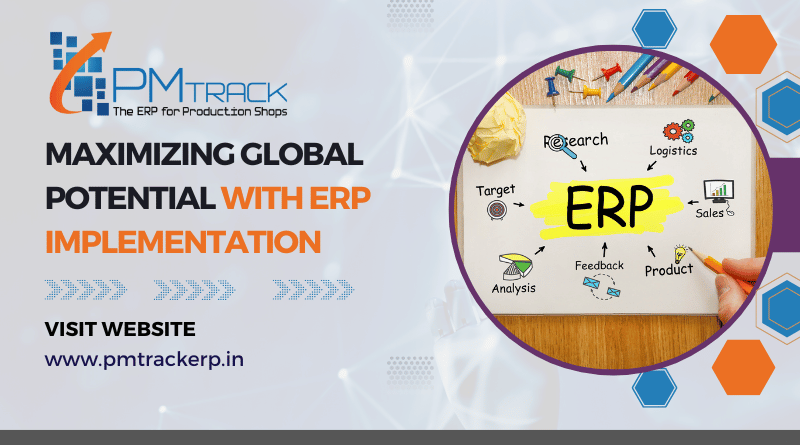
Maximizing Global Potential with ERP Implementation

Maximizing Global Potential with ERP Implementation

If your business is starting to expand, or you have developed a strategy to grow your business globally in the future, you’ll soon need a new ERP system that is flexible, agile, and efficient.

From data analysis, reporting, tracking, and automation, ERP’s will provide your organization with the data needed to grow successfully.

The Globalization of ERP for Small and Medium Businesses can be a positive step for any business. This software can improve customer relationship management, supply chain, and customer service.

In addition, this software can improve the Customer Care department. The collection of data in a single database makes it easier to develop reports and business insights, and it can help with decisions in the long term. By leveraging these powerful ERP tools, small and mid-sized businesses can be more successful at international integration.

While ERP can help in many aspects of a business’s operations, it can be a challenge for smaller businesses. While this technology largely applies to large businesses, it is not the best choice for SMEs. In fact, it can make or break a business. If you are looking to grow and scale, it’s important to choose an ERP system that offers scalability and flexibility.

In this post, we’ll discuss how choosing the right ERP system may help you reach your global goals.

1. Cloud Capabilities

Cloud computing has revolutionized the way business can operate. By running programs and storing information in the cloud, companies don’t need to manage and upkeep servers on-premises. Most software as a solution (SaaS) companies run on the cloud, and ERP systems are no exception. Cloud capabilities for ERP systems give companies the ability to easily add more functionality as needed.

Additionally, cloud computing helps companies scale with ERP because their system is never out-of-date. SaaS products are managed and regularly updated by the provider, and updates often occur automatically so their customers have the best version of the program at all times. This means companies can focus on using their ERP system to run their business instead of managing data and updates or working with an out-of-date system.

2.Global Capabilities

One way companies scale is to expand globally and ERP systems that support global capabilities help companies grow their international presence. Global capability goes beyond supporting multiple languages; although, this is important, too. Doing business in other parts of the world means complying with local laws and tax codes.

For example, some companies are implementing laws that customer information of their citizens must be stored on servers in that country. An ERP system with specific localizations for these countries or other countries with complex business regulations helps companies scale their business in these areas more easily.

Globalization is another important aspect affected by cloud computing. When regulations in a country change, the ERP Solution provider in Pune can update their localization for that country and prevent business disruptions for their clients.

3. Mobile, IoT, and AI Capabilities

Technology is more interconnected now than ever, and it continues to grow. ERP systems are connective by nature because they allow consistent, real-time data to flow into applications from a central database. However, ERP systems taking advantage or planning to implement services that leverage mobile, Internet of Things (IoT), and machine learning (AI) will help companies scale into the future.

The capabilities we have now might not be what we’ll need in the future, so an ERP system working on new capabilities will future-proof companies. Whether that’s expanded mobile functionality, IoT connectivity with devices throughout the company, or machine learning abilities, an ERP system helps companies scale both today and well into tomorrow.

4. Productivity

Without an efficient ERP system, those manual yet important day-to-day tasks, such as generating reports and monitoring inventory, will become unavoidable – less than ideal for a business looking to expand globally.

With the right ERP solution, tasks can be automated instead, freeing up time and resources and ensuring productivity across all levels.

5. Integration

Instead, your ERP system should integrate all data management processes into a global database, which can be accessed via one, standard system.

Integrating resources into a singular system allows for increased efficiency, visibility insights, and improved productivity.

Transparency and real-time data consistency are what allow companies to identify areas of growth and trouble spots that need attention. Multiple technology solutions that don’t interact with each other lead to data (and department) silos, making growth difficult when the big picture can’t be put together.

ERP implementation with PMTRACK ERP

Implementation of an ERP is a must for most small- to medium-sized enterprises, but it is absolutely necessary for organizations seeking to expand their global reach.
PMTRACK ERP is a global, independent provider of industry-specific Manufacturing ERP software that simplifies business complexity for manufacturers and distributors. The PMTRACK ERP solution, which focuses on delivering optimal performance and total company visibility, is extremely scalable and can be deployed on-premise, in the cloud, or via mobile device.

PMTRACK ERP’s strengths include a simplified approach to technology, knowledge in a variety of industries, and a dedication to future-proofing customer and partner success.

Interested in learning more about how ERP might help you achieve your globalization goals?

Are you looking for an ERP partner to help take your business to the next level? Let’s discuss what an ERP system can do for your company and how we can help.


Key Features of PMTRACK Manufacturing ERP Software

Key Features of PMTRACK Manufacturing ERP Software

Table of Content

  • Why do Manufacturing Companies Need ERP?
  • Features of PMTRACK Manufacturing ERP Software
  • Conclusion

Manufacturing ERP (Enterprise Resource Planning) software and systems are a set of integrated tools used by the manufacturing industry to plan, manage, and offer certain features that help manufacturers and their businesses.

Manufacturing ERP is a centralised system that manages data from all stages of the manufacturing business process, from production to payroll. ERP software enables real-time decision-making while automating business processes and applications, resulting in a comprehensive business management platform for manufacturing sectors.

PMTRACK ERP offers the best all-in-one ERP Software for Manufacturing businesses. Our Manufacturing ERP software is specifically developed to connect core manufacturing business operations while lowering operational expenses for the manufacturing industry.

PMTRACK ERP is a Cloud-Based Manufacturing Software that boosts labour efficiency by providing integrated ERP solutions for manufacturing, MRP, BOM, production, planning, purchase, inventory, warehouse, sales, finance, CRM, HR & Payroll, and more.

Why do Manufacturing Companies Need ERP?

The manufacturing module in ERP packages can greatly help both small and large manufacturers.
An ERP tool is an excellent fit for every manufacturing business. ERP organizes and combines processes such as manufacturing, procurement, supply chain, and distribution.

Manufacturing ERP solutions improve production efficiency while also providing 360-degree visibility into day-to-day operations. With enhanced visibility, business stakeholders may better coordinate and collaborate.

Let us explore more about the benefits of PMTRACK Manufacturing ERP software.

Manufacturing Modules

Manufacturing modules are an essential element of the PMTRACK manufacturing ERP software. ERP software developed from materials requirement planning (MRP) to incorporate a variety of manufacturing-related modules such as inventory management, production management, and manufacturing execution systems.

Inventory Management

Every manufacturing company requires a sufficient inventory stock to manufacture demanded goods on schedule. PMTRACK manufacturing ERP software gives enterprises comprehensive control over their inventory and raw materials. The software gives producers real-time information about inventory levels and streamlines the stock order process.

Accounting and Finance

PMTRACK ERP software gives manufacturers access to accounting and finance modules that assist them manage their financial activities and accounts, helping them to increase profits and cut costs. Accounting and finance managers can use integration to assign the appropriate budget for raw supplies, labour, and transportation.

Production Planning

PMTRACK ERP software for manufacturing units enables you to plan and schedule production based on demand estimates, raw material availability, and production capacity restrictions. Additionally, you can receive real-time reports on manufacturing progress and capacity utilisation.

Automated Processes

ERP-driven automation enables manufacturers to automate manual procedures, reducing human effort and error. Manufacturing organisations can use technologically advanced software to automate a variety of activities, including procurements, sales invoicing, HR services, and more.

Sales and order management

Customers put orders for the things they require. These customer purchase orders become sales orders at the manufacturer. ERP directs operations to schedule work and buying to order the component supplies required to meet those client requests.
ERP also notifies sales management if the order is on schedule, giving them the opportunity to notify the customer if there is a risk. ERP records all needed transactions, which are linked to the sales order requirement. This enables intelligent reporting.

Business intelligence

BI (business intelligence) is an essential feature for any manufacturer. ERP systems monitor all transactions in any module. The time and date of the transaction, as well as who entered it, are recorded. These transactions provide the audit trail, which is an essential component of management control systems.

ERP also relies on configuration and setup records for each module. These may be basic settings for certain transactions. By default, the setting for a make-to-order firm will create links to sales orders. In contrast, a make-to-stock manufacturer will relate those defaults to inventory replenishment projections.

Customer relationship management

Your ERP system contains a customer relationship module, or CRM. This module includes capabilities for tracking all communications between a manufacturer and a customer. These communications can be verbal over the phone or in person. They might be simple advertising pieces sent via mail, digitally, or in any other format. A phone discussion may begin with a simple question, “How are things today?” and progress through multiple follow-ups to a quote and sales order.

Supply Chain and Distribution Management

Inefficient supply chains and distribution can cause delays in production and delivery of completed goods. PMTRACK manufacturing ERP software’s supply chain and distribution management capability can help track goods in real time across numerous supply chain channels. These channels include suppliers, manufacturers, distributors, retailers, and end users.

Conclusion

Manufacturing companies face numerous challenges when searching for a new ERP system. After comprehending the significance of these aspects, you realize that manufacturing ERP software is essential. ERP software in Pune, India, offers the best ERP software. As a premier ERP software vendor, they have specifically built to meet the special requirements of the manufacturing industry.

Manufacturing businesses must digitize and automate their operations in order to react to changing business environments and maintain a competitive advantage. PMTRACK ERP for manufacturing companies is a technologically advanced system that helps manufacturers achieve operational agility and process efficiency.

Furthermore, deploying this software assists in reducing your manufacturing company’s operational costs while increasing productivity. PMTRACK ERP, an outstanding ERP solution provider, offers the above-mentioned capabilities to help streamline manufacturing operations.

Are you looking for a trusted ERP implementation provider for your manufacturing business? you can contact us today with your business queries and details.


The Future of ERP: Predictions & Trends For 2023

The Future of ERP: Predictions & Trends For 2023

Table of Content:

1. Here are the top 11 ERP trends for 2023

2. The Future of ERP

3. Conclusion

As the year 2023 approaches, Enterprise Resource Planning (ERP) systems undergo considerable changes. ERP Software has formed the backbone of company operations, streamlining procedures, integrating data, and allowing companies to make data-driven decisions.

Because the business world is becoming digital-first, businesses require enterprise applications that enable them to be more nimble and make decisions based on clean, real-time data in order to improve performance and guide strategy. The old processes and systems are no longer functional; 2023 is the year to be brave and exploit the future of ERP.

The PMTRACK ERP system evolves and changes in conjunction with the evolution of business trends. More modern technologies are always being added to the system’s functionality to assist users to remain nimble in a fast-changing environment.

In this blog post, we will look at the Improvements and Trends in The ERP field for 2023. Let us investigate the ERP projections for the future to determine the location.

Here Are the Top 11 ERP Trends For 2023

1. Cloud-based ERP:

More organizations will adopt cloud-based ERP solutions to improve scalability, flexibility, and accessibility.

The cloud-based ERP trend will continue to grow in 2023, as organizations recognize the benefits of scalability, flexibility, and cost-effectiveness offered by cloud-based solutions.

Cloud-based ERP systems eliminate the need for on-premises infrastructure, allowing organizations to access their ERP software and data securely from anywhere, anytime.

With cloud-based ERP, organizations can easily scale their operations, integrate with other cloud services, and benefit from automatic updates and maintenance, enabling them to focus on their core business activities.

2. Artificial Intelligence (AI):

AI-powered capabilities, such as machine learning and predictive analytics, will be integrated into ERP systems to automate processes, gain insights, and enhance decision-making.

The artificial intelligence (AI) trend in ERP systems will gain significant traction in this year, as organizations seek to automate processes, improve decision-making, and enhance user experiences.

AI-powered ERP systems will leverage machine learning algorithms and natural language processing to analyze data, predicts outcomes, and provides intelligent recommendations for optimizing business operations.

By integrating AI into ERP, organizations can streamline workflows, reduce manual tasks, and gain valuable insights from data, ultimately driving efficiency, productivity, and innovation in their operations.

3. Blockchain Integration:

ERP systems will integrate blockchain technology to enhance data security, transparency, and trust in supply chain management and financial transactions.

The integration of blockchain technology into ERP systems will become a prominent trend in 2023, as organizations recognize the potential for enhanced security, transparency, and traceability in their business processes.

Blockchain integration in ERP will enable organizations to securely record and verify transactions, create immutable audit trails, and streamline supply chain management by tracking goods from production to delivery.

With blockchain integration, organizations can reduce fraud, increase trust among stakeholders, and simplify compliance with regulations, ultimately improving efficiency and fostering a more secure and trustworthy business environment.

4. IOT Integration

IoT integration will be a key ERP trend in 2023, as organizations seek to leverage real-time data from connected devices to enhance operational efficiency and decision-making.

ERP systems will increasingly connect with IoT devices such as sensors, wearables, and smart machines, enabling organizations to gather valuable insights and optimize processes.

The integration of IoT with ERP will enable organizations to monitor and track assets, automate inventory management, and improve supply chain visibility.

By harnessing the power of IoT integration, ERP systems in 2023 will empower organizations to unlock new levels of productivity, agility, and innovation.

5. Mobile ERP:

Mobile accessibility will become a standard feature in ERP systems, allowing users to access and manage data anytime, anywhere.

As businesses realize how important it is to manage vital company data while on the go, mobile ERP will remain a prominent trend in 2023.

With mobile ERP, users can conveniently access real-time information, collaborate with team members, and make informed decisions from anywhere, using their smartphones or tablets.

Mobile ERP apps will offer intuitive user interfaces, personalized dashboards, and seamless integration with other business systems, providing a seamless and efficient user experience.

The adoption of mobile ERP will enable organizations to enhance productivity, responsiveness, and agility by enabling employees to stay connected and productive even when they are away from their desks.

6. Advanced Analytics:

ERP systems will offer more advanced analytics capabilities, including data visualization, data mining, and predictive modeling, to derive actionable insights from vast amounts of data.

The advanced analytics trend in ERP systems will gain momentum in this year, as organizations recognize the value of deriving actionable insights from vast amounts of data.

ERP systems will offer advanced analytics capabilities, such as data visualization, data mining, and predictive modeling, to help organizations make informed decisions and identify trends and patterns.

With advanced analytics integrated into ERP systems, organizations can gain a deeper understanding of their operations, customer behavior, and market trends, enabling them to optimize processes and drive business growth.

By leveraging advanced analytics in ERP, organizations will be able to proactively identify opportunities, mitigate risks, and improve overall performance, leading to a competitive advantage in the market.

7. Automation and Robotics:

ERP systems will integrate with automation and robotics technologies, enabling organizations to automate repetitive tasks and streamline operations. Automation and robotics will play a crucial role in ERP software services, streamlining processes and increasing efficiency, leading to improved productivity and cost savings.

8. Enhanced Cyber Security:

ERP systems will prioritize cybersecurity measures, including multi-factor authentication, data encryption, and threat detection, to protect sensitive business data.

The enhanced cybersecurity trend will be a top priority in 2023 as organizations recognize the increasing threats and risks associated with cyberattacks and data breaches.

Organizations will invest in advanced cybersecurity measures such as AI-powered threat detection, multi-factor authentication, and encryption to protect their sensitive data, systems, and networks from unauthorized access and malicious activities.

9. Industry-specific ERP Solutions:

ERP vendors will develop industry-specific solutions tailored to the unique needs of sectors such as manufacturing, healthcare, retail, and logistics.

The trend of industry-specific ERP solutions will continue to rise in 2023, as organizations seek tailored software that caters to the unique needs and requirements of their specific industry.

Industry-specific ERP solutions offer specialized features, workflows, and integrations that enable organizations to optimize their operations, comply with industry regulations, and gain a competitive advantage in their respective markets.

10. Integration With Other Business Systems:

ERP systems will seamlessly integrate with other business systems, such as CRM, HR, and supply chain management, to achieve end-to-end process optimization and data synchronization.

11. Enhanced User Experience:

ERP systems will focus on improving user interfaces, personalization options, and overall user experience to increase user adoption and productivity.

The latest ERP trends are centered on improving user experience by incorporating features such as mobile accessibility, streamlined workflows, and personalized dashboards. These advancements aim to empower users with a seamless and efficient ERP experience, ultimately leading to increased productivity and user satisfaction

The Future of ERP

The future of ERP (Enterprise Resource Planning) looks promising as technology continues to advance. With the advent of artificial intelligence (AI) and machine learning, ERP systems are becoming more intelligent and capable of handling complex business processes. These advanced systems can automatically analyze data, identify patterns, and make predictions, enabling businesses to make more informed decisions and streamline their operations.

One key trend in the future of ERP is the integration of IoT (Internet of Things) devices. By connecting various devices and sensors to the ERP system, businesses can collect real-time data on production, inventory, and customer behavior. This data can then be used to optimize processes, improve efficiency, and provide better customer experiences.

Another important aspect of the future of ERP is cloud computing. Cloud-based ERP systems offer numerous benefits, such as easy scalability, cost-effectiveness, and remote access. With cloud ERP, businesses can access their data and applications from anywhere, anytime, and scale their resources up or down as needed. This flexibility is particularly valuable for businesses with multiple locations or remote teams.

Furthermore, the future of ERP is likely to see a greater emphasis on customization and personalization. Businesses will be able to tailor their ERP systems to meet their specific needs and preferences, allowing for more efficient and effective operations. Additionally, ERP systems will become more user-friendly, with intuitive interfaces and simplified workflows, making it easier for employees to navigate and utilize the system.

Conclusion

It is encouraging to see well-known ERP companies in India following trends and incorporating cutting-edge functionality into their ERP software. However, in the end, businesses require stability and predictability. Because of this, market leaders in ERP include SAP NetSuite, SAP S/4HANA Cloud, SAP ECC, Microsoft Dynamics 365 Business Central, SAP Business One, or SAP Business One. These ERPs include contemporary technologies while maintaining their inherent predictability.

The future of ERP is bright, with advancements in AI, IoT integration, cloud computing, and customization. These developments will enable businesses to harness the power of data, optimize their processes, and make more informed decisions. As technology continues to evolve, ERP solution in Pune will play a pivotal role in helping businesses stay competitive and thrive in the ever-changing business landscape.

At the end of the day, the market will choose the Best ERP Company in India that can continue to provide proven answers to difficulties that businesses confront while also developing new functionalities. If you’re looking for an ERP that can balance stability and cutting-edge functionality, you have come to the right place. To create a reliable and secure company process, contact PMTRACK ERP.


Posted By Category: ERP Software
Book A Demo
close slider
×
Show